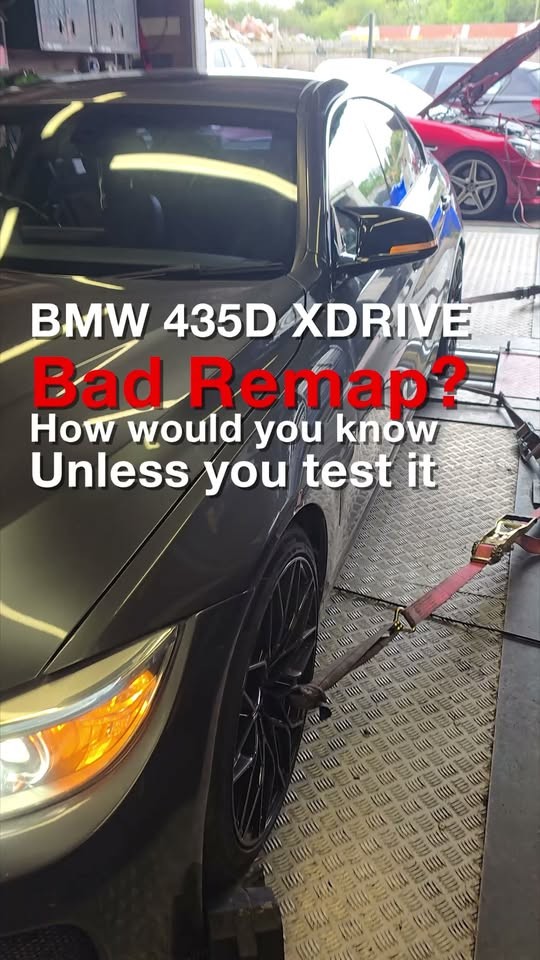
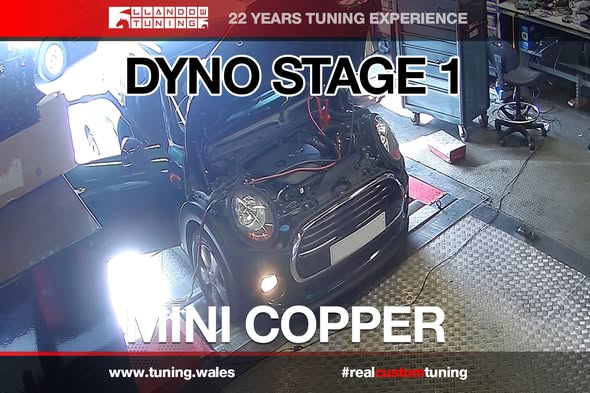
Imagine paying for a remap that promises big gains, only to receive a file that hasn’t been tested on your car. Rescaling the accelerator pedal can make it feel more powerful without actually increasing its maximum power. Worse still, a badly written calibration can put the engine at risk.
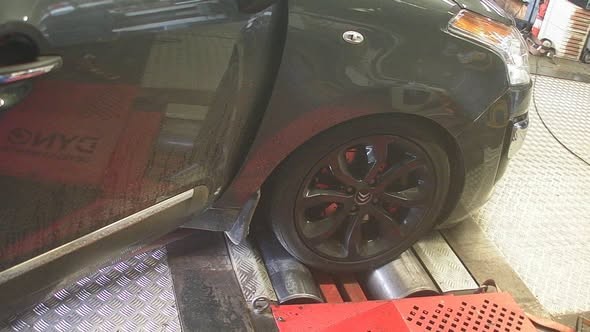
You don’t even need a rolling road to measure the results. A properly set up road dyno, using a sensor attached to a wheel, can calculate power from the car’s weight, speed and acceleration, with road resistance and test conditions taken into account.
So if a mobile tuner isn’t measuring the results, what are their power claims based on? And if a tuning centre owns a rolling road, why aren’t they using it to check your car?
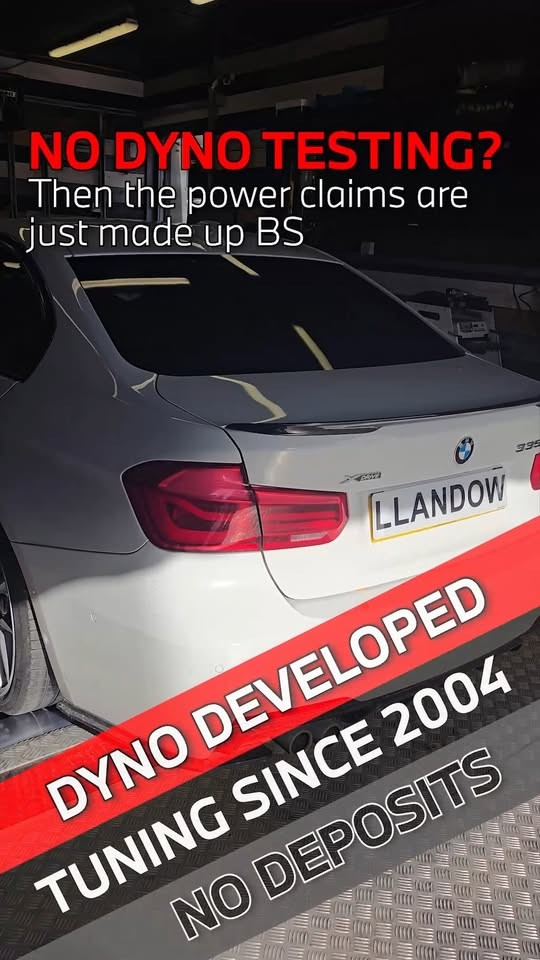
Today’s BMW 335d xDrive is a good example. I thought my first calibration would give a good result, but testing showed just 320 HP, up from 300 HP standard. That told us there was more work to do. We reworked the calibration and tested again, finishing at 380 HP and just under 700 Nm.
𝗦𝘁𝗮𝗻𝗱𝗮𝗿𝗱: 𝟯𝟬𝟬 𝗛𝗣
𝗙𝗶𝗿𝘀𝘁 𝗰𝗮𝗹𝗶𝗯𝗿𝗮𝘁𝗶𝗼𝗻: 𝟯𝟮𝟬 𝗛𝗣
𝗙𝗶𝗻𝗮𝗹 𝗿𝗲𝘀𝘂𝗹𝘁: 𝟯𝟴𝟬 𝗛𝗣 / 𝗷𝘂𝘀𝘁 𝘂𝗻𝗱𝗲𝗿 𝟳𝟬𝟬 𝗡𝗺
The ZF 8HP gearbox also received a custom calibration for faster shifts, with increased clutch pressure to help the clutch packs hold the extra torque and reduce the risk of slipping.
Anyone can quote a power figure. Testing shows what the car actually delivers, and checking how the engine behaves under load matters just as much as the headline number.
𝗪𝗵𝗮𝘁’𝘀 𝘁𝗵𝗲 𝗽𝗼𝗶𝗻𝘁 𝗼𝗳 𝗮 “𝗰𝘂𝘀𝘁𝗼𝗺” 𝗰𝗮𝗹𝗶𝗯𝗿𝗮𝘁𝗶𝗼𝗻 𝗶𝗳 𝗶𝘁 𝗶𝘀𝗻’𝘁 𝘁𝗲𝘀𝘁𝗲𝗱 𝗼𝗻 𝘆𝗼𝘂𝗿 𝗰𝗮𝗿?
#LlandowTuning #BMW335d #BMWTuning #CustomRemapping #DynoTesting #ZF8HP #bmw #remaps
Read original post: THIS IS WHY WE TEST OUR TUNING.